Community organisations cannot, and should not, try to do everything alone.
Successful community partnerships bring together different strengths. One organisation may understand local families, another may offer a welcoming venue, while others provide funding, specialist knowledge or trusted connections.
By working together, a promising idea has a much better chance of becoming meaningful, sustainable support.
What Makes Successful Community Partnerships?
A community partnership is a working relationship between organisations that share an aim.
For Zen Community Hub, potential partners may include:
- Community groups and charities.
- Local authorities and public services.
- Carer, fostering and family-support organisations.
- Schools and colleges.
- Employers and professional teams.
- Funders and grant-making bodies.
- Venues and trained practitioners.
The partnership does not need to be enormous. A venue offering an affordable room or an organisation helping us speak to local carers may be just as valuable as a large funding arrangement.
What could we create together?
Subject to funding and approval, community wellbeing partnership projects might include:
- Subsidised wellbeing sessions for unpaid carers.
- Support for foster, adoptive and kinship families.
- Sensory-aware community workshops.
- Wellbeing events for SEND families.
- Professional wellbeing sessions for caring teams.
- Creative activities designed to reduce isolation.
- Community events that combine information, connection, and relaxation.
The best partnerships begin with a need, not with two organisations searching for somewhere to place their logos.
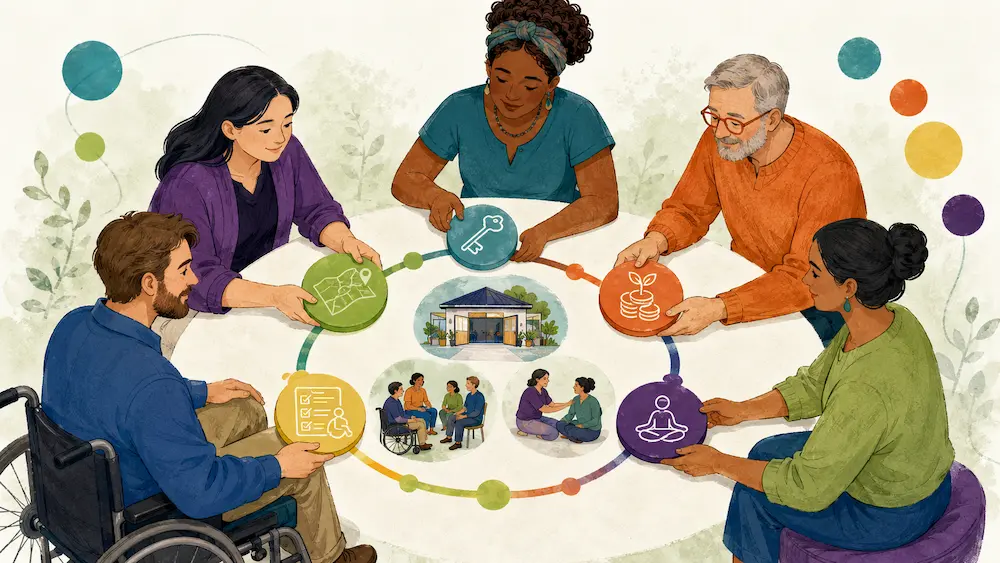
Clear roles matter
Successful collaboration needs more than goodwill. Partners should understand:
- Who is responsible for delivery?
- How safeguarding and accessibility will be managed.
- What funding can be used for?
- How will outcomes be evaluated?
- Who owns information and creative materials?
- What happens when the project ends?
Zen Community Hub is separately governed from The Zen Rooms. Where The Zen Rooms is considered a delivery provider, the relationship, costs, and any conflict of interest must be declared and properly approved by the committee.
That protects the Hub, its partners and the communities involved.
Ashfield District Council’s health and wellbeing information illustrates the wider local focus on healthier, happier communities.
If your organisation has local knowledge, a venue, funding, specialist experience or a community that could benefit, we would be pleased to talk.
This group is hosted in The Zen Rooms’ free online community. You’ll need to sign in or create a free account to join (simply click the button above).